
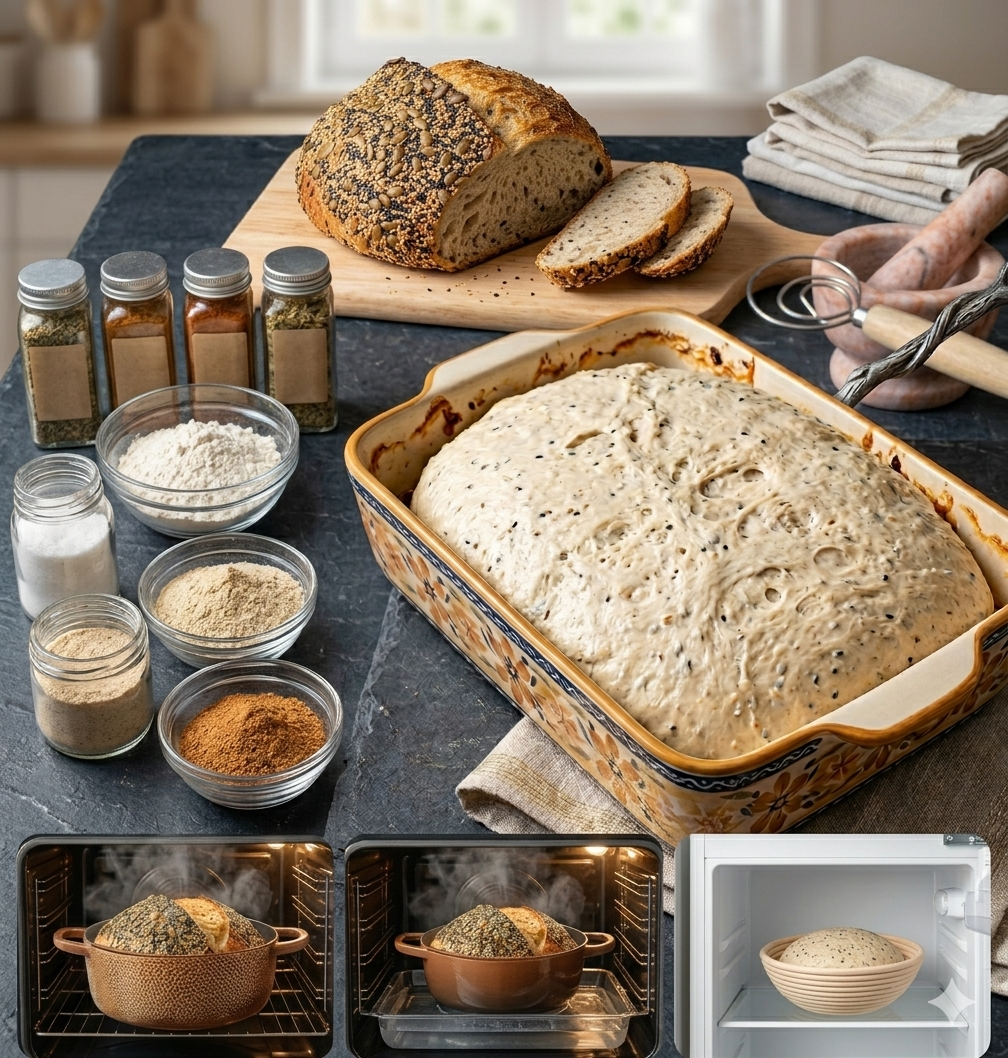
There’s something truly magical about baking your own Bread at home. The smell, the warmth, and that first slice with a crispy crust — it just feels special. This is exactly why I love making Sourdough Bread . It’s simple, wholesome, and full of flavor.
The first time I tried this recipe, I was honestly a little nervous. Sourdough sounded complicated. But once I followed the steps, I realized how easy and relaxing it can be. Now, Sourdough Bread has become a regular part of my kitchen routine.
Not only does it taste amazing, but it’s also healthier than regular bread. It’s easier to digest and made with natural fermentation. If you’re looking for a beginner-friendly sourdough recipe, you’re in the right place.
Why You Will Love This Recipe
- Simple and beginner-friendly – No complicated techniques
- Naturally healthy – Made with simple, clean ingredients
- Rich flavor – Slight tangy taste with a crispy crust
- Relaxing process – Baking this bread feels therapeutic
- Versatile – Perfect for breakfast, sandwiches, or snacks
Ingredients List
Here’s everything you need to make Sourdough Bread:
Baked Goods
- 500 g bread flour
- 50 g whole wheat flour
- 440 g water (room temperature)
- 100 g active sourdough starter
- 10 g salt
Optional:
- 1 cup mixed seeds (sunflower, sesame, flax)
All ingredients are simple and easy to find. That’s the beauty of this recipe.
Step-by-Step Instructions
Step 1: Mix the Dough
In a large bowl, combine bread flour, whole wheat flour, and water. Mix until no dry flour remains.
Let it rest for 30 minutes. This step is called resting and helps improve texture.
Step 2: Add Starter and Salt
Now add your sourdough starter and salt. Mix everything well until the dough becomes soft and slightly sticky.
Don’t worry if it feels messy — that’s normal!
Step 3: Stretch and Fold
This is the secret to good Sourdough Bread.
Baked Goods
- Perform 4 stretch and folds
- Do one every 30 minutes
Each time, gently stretch the dough and fold it over itself. You’ll see it becoming smoother and stronger.
Step 4: Bulk Fermentation
Let the dough rest for 3–5 hours at around 25°C.
During this time, the dough will rise and develop flavor. It should look airy and slightly puffed.
Tip: If your room is cold, it may take a bit longer.
Step 5: Shape the Dough
Lightly flour your surface and shape the dough into a round or oval shape.
Place it into a floured banneton basket (or any bowl with cloth).
Step 6: Cold Fermentation
Cover the dough and place it in the fridge overnight.
This step gives Sourdough Bread its deep flavor and better texture.
Step 7: Baking the Bread
Next morning:
- Preheat oven to 250°C for 30 minutes
- Take dough out and lightly sprinkle water on top
- Score the dough with a sharp knife
Place it in the oven with a tray of water.
- Bake for 30 minutes with steam
- Remove water tray
- Bake another 30 minutes
Turn the bread halfway for even color.
Let it cool before slicing (this is the hardest part ).
Pro Tips & Variations
Use an active starter — this is very important
- Don’t rush fermentation — flavor takes time
- Add seeds or herbs for extra taste
- Use a Dutch oven if available for better crust
- Avoid cutting hot bread — it can become gummy
Health Benefits
One of the best things about Sourdough Bread is how healthy it is.
- Easier digestion – Natural fermentation helps your gut
- Lower glycemic index – Better for blood sugar control
- Rich in nutrients – Contains vitamins and minerals
- No preservatives – 100% natural
It’s a great option if you’re trying to eat clean and avoid processed food.
Serving Suggestions
There are so many ways to enjoy Sourdough Bread:
- Toast it with butter or jam
- Make sandwiches or toasties
- Serve with soup or salad
- Drizzle olive oil and sprinkle salt for a simple snack
Honestly, even plain slices taste amazing!
Storage Tips
- Keep at room temperature for 2–3 days
- Freeze slices for up to 1 month
- Store in a paper bag or bread box
- Reheat in oven for fresh taste
Avoid storing in plastic — it can make the crust soft.
Frequently Asked Questions (FAQs)
1. What is sourdough starter?
It’s a natural mixture of flour and water that helps the bread rise.
Baked Goods
2. Why is my bread not rising?
Your starter may not be active enough.
3. Can I skip cold fermentation?
Yes, but the flavor will not be as rich.
4. Why is my bread too dense?
It may need more fermentation time.
5. Can I use only white flour?
Yes, but adding whole wheat improves flavor and nutrition.
Conclusion
Making Sourdough Bread at home is easier than it seems. With a little patience and love, you can create bakery-style bread right in your own kitchen.
This recipe is perfect for beginners and anyone who enjoys homemade food. Once you try it, you’ll never want store-bought bread again.
